
Description
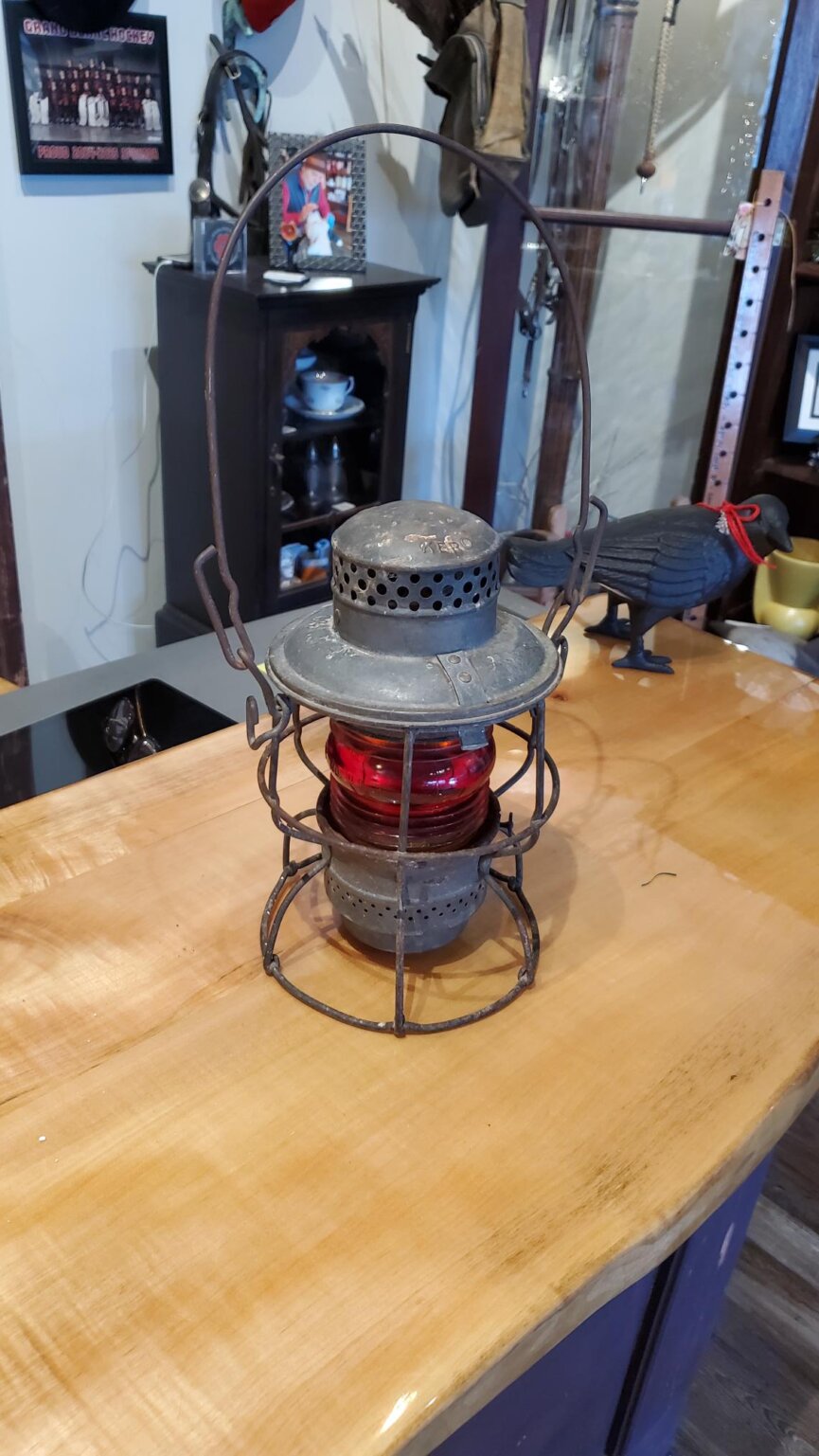
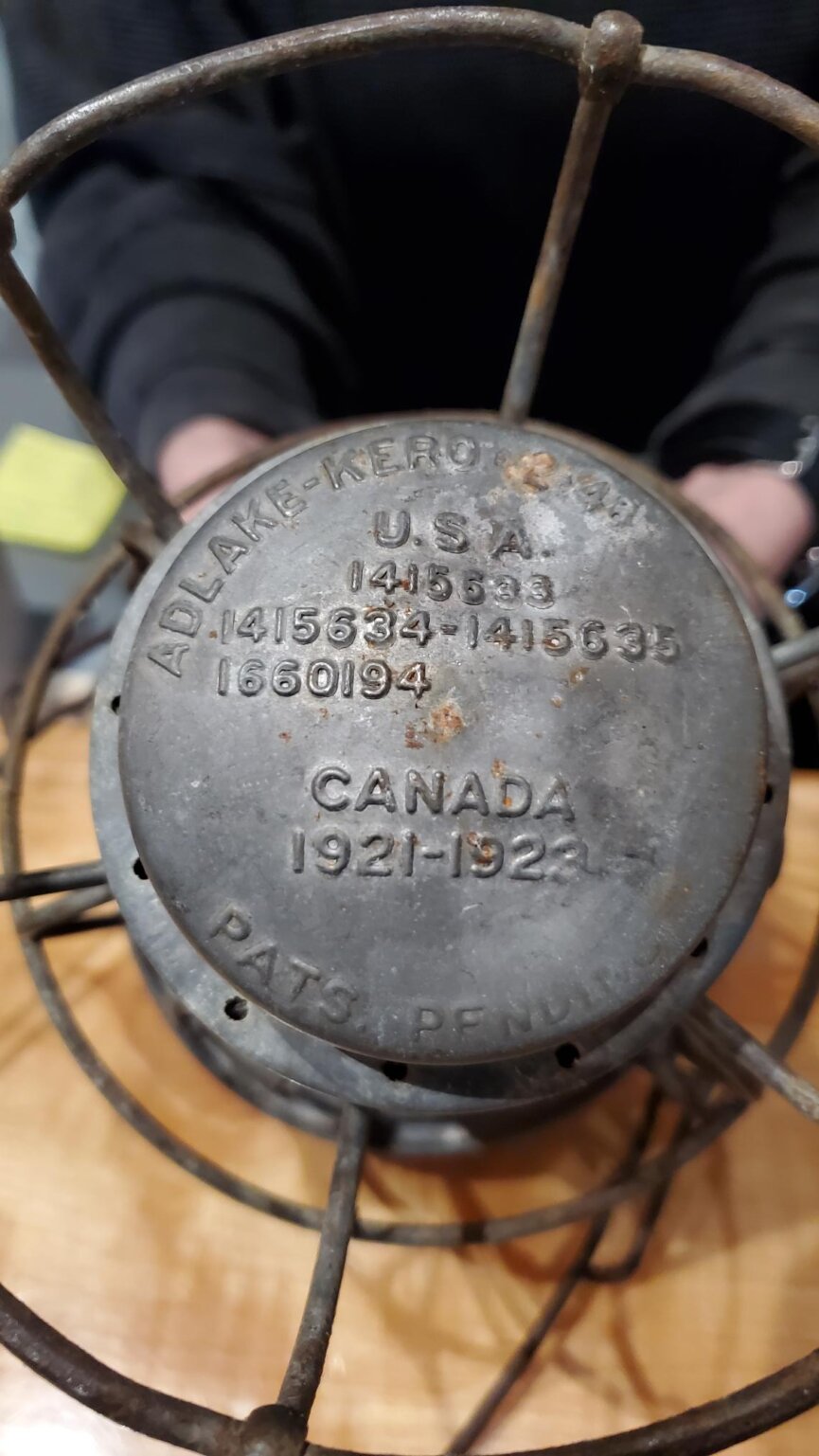
This early Adlake Kero No. 4½ railroad lantern is an authentic survivor from the early 1920s, carrying U.S. patent numbers from 1922–1924 and Canadian dates stamped 1921–1923. Built by the Adams & Westlake Company—better known as Adlake—this lantern represents a key period in North American railroad history, when kerosene-burning signal lamps were essential tools for engineers, switchmen, and yard crews working long shifts through weather, darkness, and the constant movement of heavy rail traffic.
The metal frame retains its original form, showing the kind of honest wear and surface oxidation that comes only from age, handling, and outdoor use. The wire cage, heat-vented top, and Kero-style burner housing are all consistent with Adlake’s 4½-series construction, a model used widely by smaller lines, interurban carriers, and industrial rail operations between the wars. This frame has not been refinished or altered; collectors prefer this untouched state, where the decades of service are visible in the metal itself.
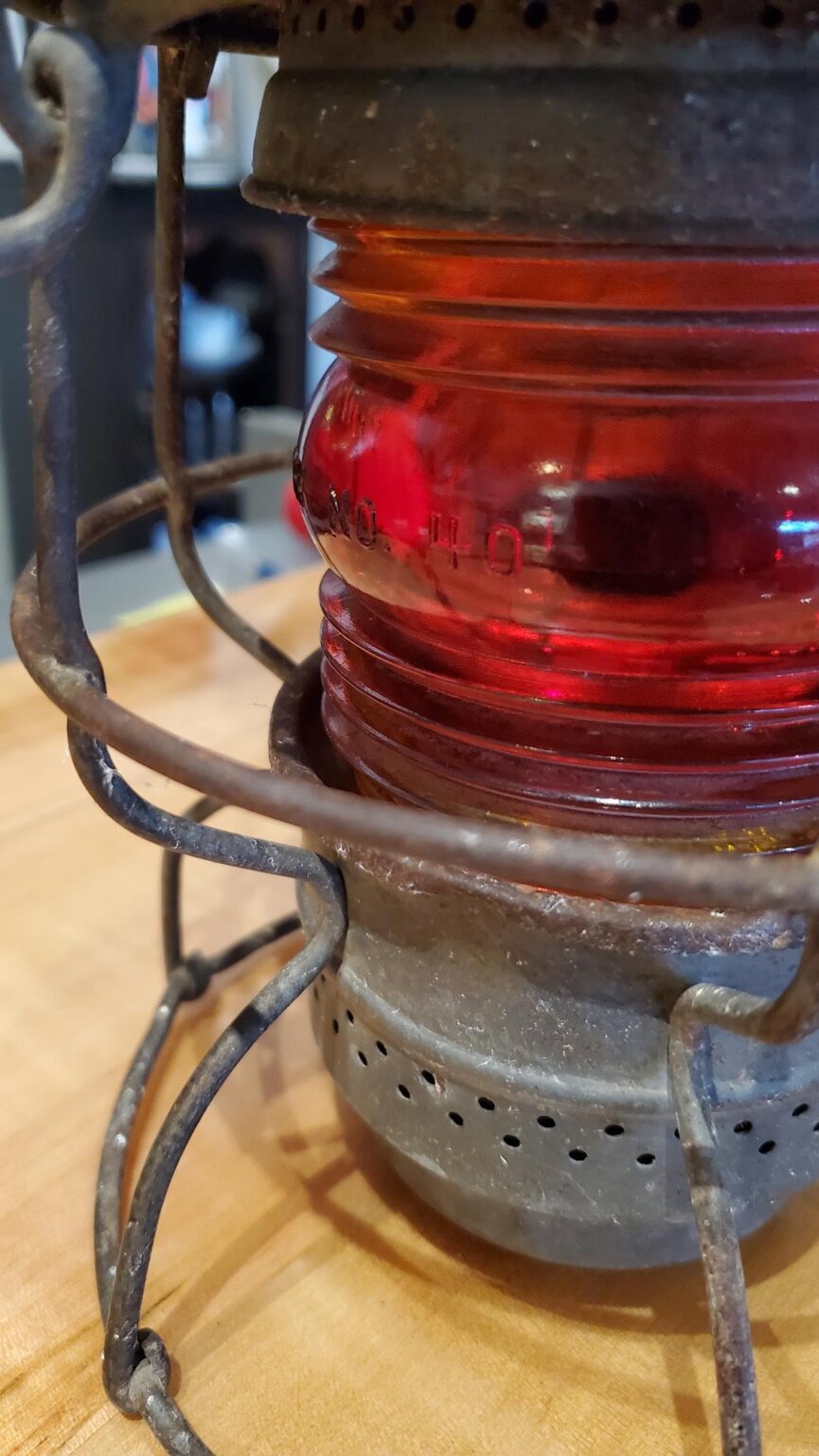
Fitted to the lantern is a ribbed red Embury No. 40 globe, a period-correct replacement made by the Embury Manufacturing Company of Rochester, New York. The deep color and heavy ribbing of this globe create a beautiful, saturated glow when lit, making it a striking display piece even outside a railroad context. Red globes served as stop, danger, and marker signals—simple but critical visual communication in the rail industry before electric systems took over.
Together, the Adlake 4½ frame and the Embury 40 globe form a visually dramatic and historically grounded lantern, now over a century old. Whether displayed in a den, office, cabin, or collection, it carries the unmistakable character of early American railroading—built for work, built to last, and built with purpose.




Reviews
There are no reviews yet.